The short version
All three are two-part resin coatings that bond to ground concrete and cure into a hard plastic film. They differ in how fast they cure, how they handle sunlight, how flexible the cured film is, and how thick they go on. Those four things decide whether a garage floor still looks new in ten Nebraska winters or starts lifting at the door in two.
| Epoxy | Polyaspartic | Polyurea |
|---|
| Cures in | Days | Hours | Minutes to hours |
| Sunlight (UV) | Yellows and chalks | Stable, stays clear | Depends on the type; aromatic polyurea yellows |
| Flex with the slab | Rigid | Flexible | Very flexible |
| Hot tires | Can pick up if thin or poorly prepped | Resists hot-tire pickup | Resists |
| Film thickness | Thick, self-levelling | Thinner, more coats | Thin, fast |
| Where we use it | Base on badly damaged slabs | Base and topcoat on most floors | Base on rough slabs |
Epoxy
Epoxy is the original garage floor coating and still a good product in the right place. It goes on thick, self-levels, bonds hard to a properly ground slab, and fills small pits as it goes. Its weaknesses are the ones everyone has seen: it yellows and chalks in sunlight, so the strip by the garage door goes amber first; it cures slowly, so the floor is out of service for days; and it is rigid, so when a slab moves with the freeze-thaw cycle the coating can crack with it. The box-store "epoxy" kits make all of this worse because they are water-based, thin, and rolled over acid-etched rather than ground concrete, which is why they peel on the first hot tire. We use a true 100%-solids epoxy as a base coat on badly damaged slabs, where its thickness and fill are exactly what the floor needs, and then put polyaspartic over it so the sun never touches the epoxy.
Polyaspartic
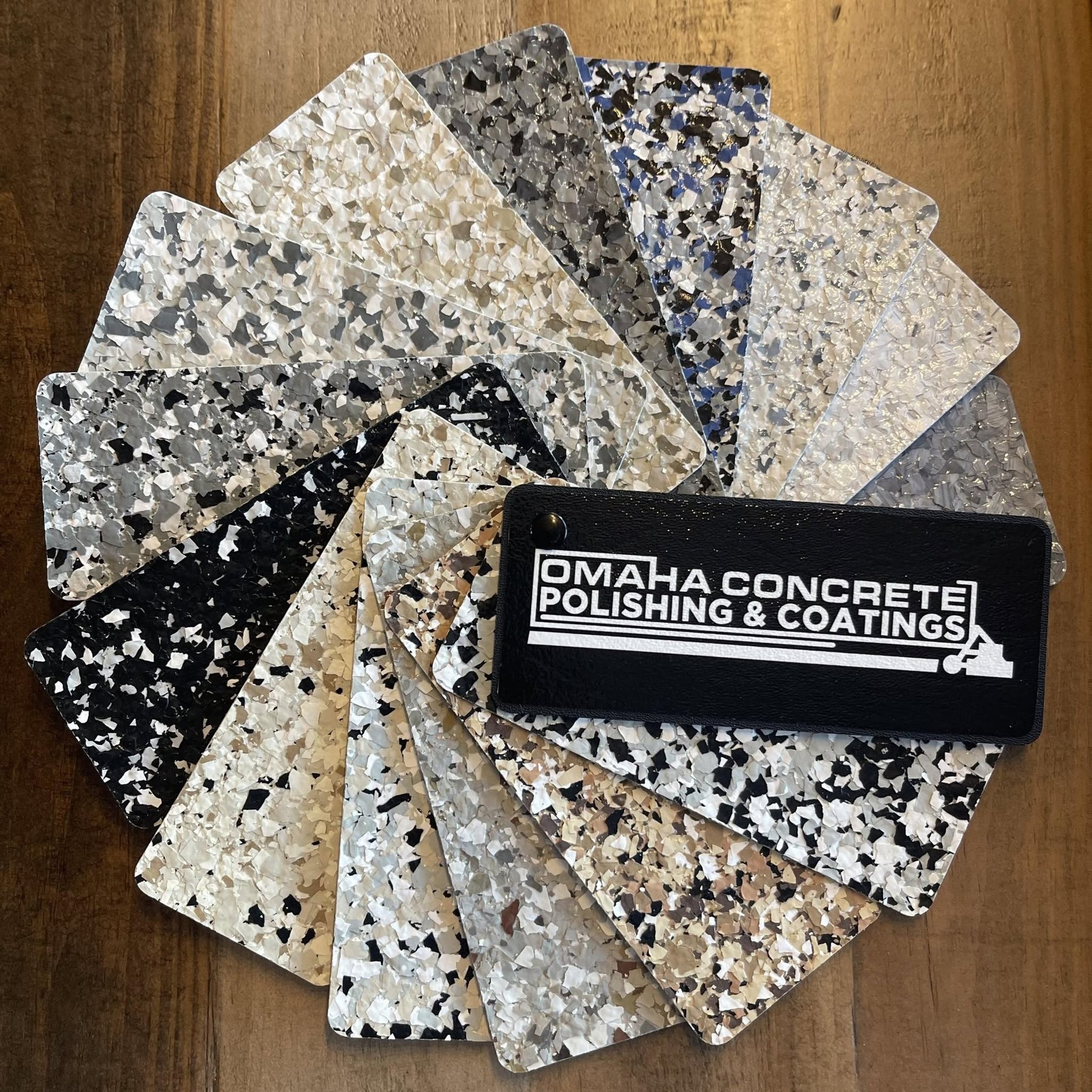
Polyaspartic is a type of aliphatic polyurea, developed for bridge and steel coatings that had to go on fast and survive outdoors. For a garage that means three things. It is UV-stable, so a clear polyaspartic topcoat stays clear and the flake colors stay true even on a south-facing garage. It cures in hours, so most of our garages are coated in a single day and you are walking on the floor the next morning. And it stays flexible, so it moves with the concrete through the winter instead of cracking. It costs more per gallon than epoxy and has a short working time once mixed, which is why it is a professional product rather than a kit: you have to grind the slab, mix small batches and move. About nine floors in ten we do are polyaspartic base and polyaspartic top, with Torginol flake broadcast to refusal in between.
Polyurea
Polyurea is the broader family polyaspartic belongs to. Straight polyurea cures very fast and is extremely flexible and tough, which is why it is used for truck bed liners and for floors that are going to move. On a rough, cracked or unevenly ground slab we use a polyurea base coat, because it wets into the profile and bridges small movement better than anything else, and then a polyaspartic topcoat for the UV stability and the finish. Aromatic polyurea on its own would yellow in sunlight; that is why it lives under the topcoat, not on top.
Why the system matters more than the name
A coating is only as good as what it is stuck to. Every floor we do starts with diamond grinding the whole slab (not acid etching), repairing cracks and pits, and a moisture check on any slab that looks suspect. Then the base coat goes on wet into that profile, the flake is broadcast until the floor will not take any more, the excess is scraped back, and the clear topcoat seals it. The 10-year warranty covers that whole system, and it is the prep, not the resin, that makes us comfortable writing it. If someone quotes you "epoxy" without grinding, the chemistry does not matter; it is coming up.
Which one should you ask for?
- A normal garage, shop or basement: polyaspartic base and top. UV-stable, one day, flexible, hot-tire proof.
- A rough or heavily cracked slab: polyurea base, polyaspartic top. We will tell you on the walkthrough.
- A badly pitted or spalled slab: epoxy base to fill and level, polyaspartic top so it never sees the sun.
- A slab that tests wet: a moisture-mitigating base first, whatever goes over it.
Cost is about the same for all three systems on a given floor, because prep is most of the work; see the cost guide for real numbers. If your old coating is already failing, why coatings peel explains what happened and how it gets fixed. Ready for a number? Send a few photos or call (531) 239-7575.
Papillion crew, Nebraska-registered. Free quotes across the Omaha metro. Nebraska Contractor Registration #76807-26.